Industries / Medical education
Training tools that keep pace with the session in the room.
Clinical teaching depends on practice that feels close to the real thing, without any risk to a patient. Educators need to change a scenario as a session unfolds, often on hardware they already own. And a training tool has to be clear about what it is: a teaching aid, not a clinical device.
Start a project
Why us
What we bring to medical education.
We run a training simulator
SimRhythm, our ECG and defibrillator training monitor, runs on iOS and iPad, Android and the web from one codebase.
Clear about what it is
Training tools stay teaching aids, not diagnostic devices, and the product says so where it matters.
Built for the session in the room
Controls that let an educator change a scenario mid-exercise without leaving the screen.
What makes it hard
The problems software has to solve here.
Familiar, but clearly training
Displays and controls should resemble the equipment learners will meet, while the tool stays plainly a simulator.
Control during the session
Educators need to change rhythms, observations or scenario steps without stopping the exercise.
Many devices, one tool
Teaching happens on iPads, phones, laptops and classroom screens, so the tool has to work across all of them.
Content experts can trust
Rhythms, values and scenarios need review by clinical educators, with clear limits on what the tool represents.
The cost of leaving it
When a guideline changes, scenario packs, handouts and slide decks are corrected by hand, and older copies stay in circulation. Session records live in paper checklists and spreadsheets, so evidence for quality reviews is pieced together again each year. Facilitators spend debrief time on admin instead of on the learners in front of them.
What we build
Software for the way the work is done.
Training simulators
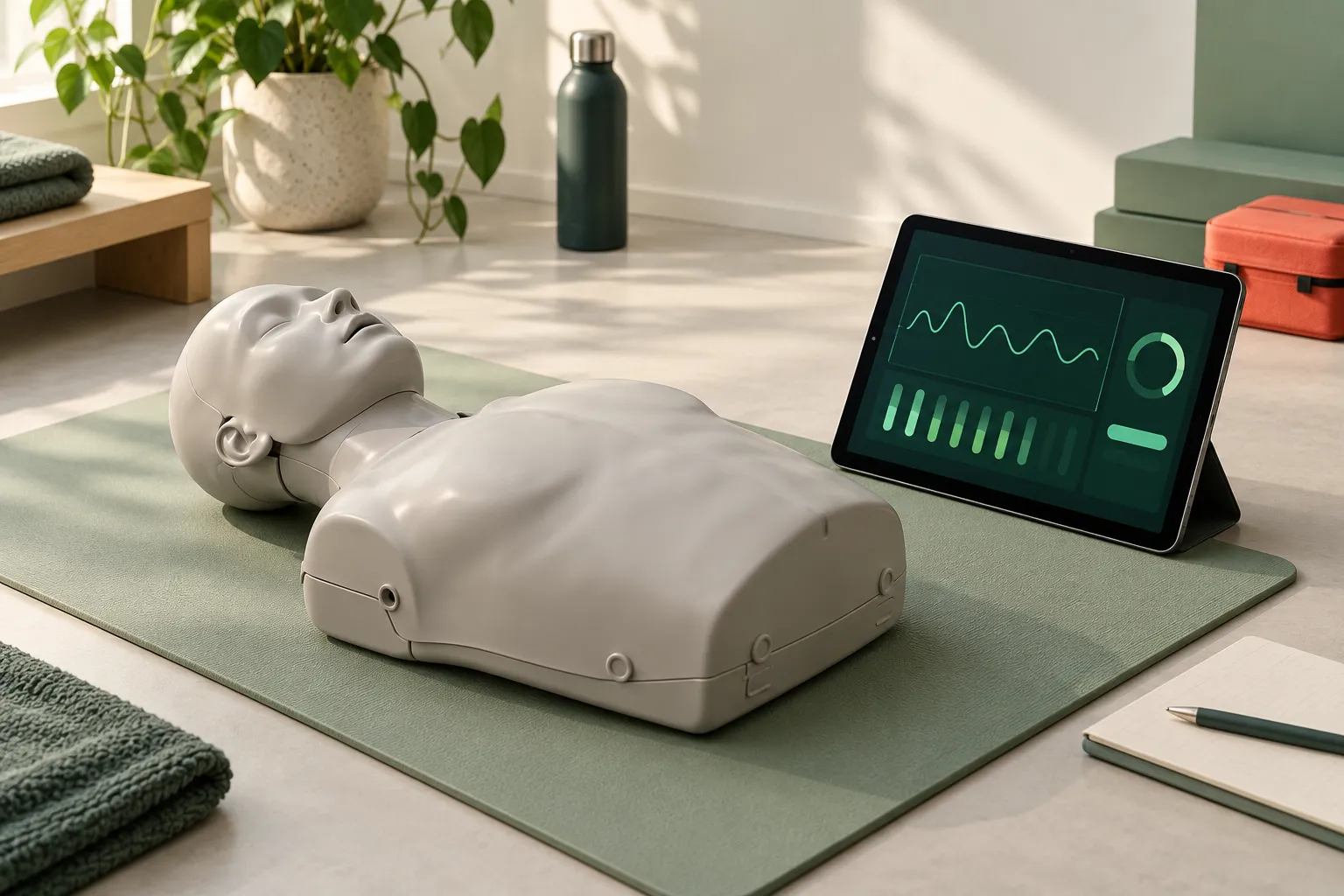
Monitor and device simulators with controls an educator can operate while a session runs.
Scenario tools
Presets and editors that set starting conditions, which instructors can adjust as practice continues.
Learning apps
Mobile and web apps for self-study, recognition practice and revision between taught sessions.
Educator tools
Ways to organise sessions, learners and teaching materials alongside the practice itself.
Applied AI
Where AI helps in medical education.
Scenario drafts for review
Draft a scenario outline from a stated learning outcome, which a clinical educator then checks, edits and signs off before use.
Debrief notes, structured
Turn a facilitator’s rough debrief notes into a tidy session record that the facilitator reviews before it is saved.
Guideline change checks
Compare course materials with a revised guideline and list passages that may need updating, for an educator to confirm.
Where it shouldn’t decide: AI should not set clinical values, rhythms or algorithm steps, and it should not decide whether a learner passes. Those stay with qualified educators.
Our applied AI work ↗Our product
SimRhythm.
SimRhythm, our ECG and defibrillator training simulator, runs from one Expo and React Native codebase on iOS and iPad, Android and the web.
Read the case study ↗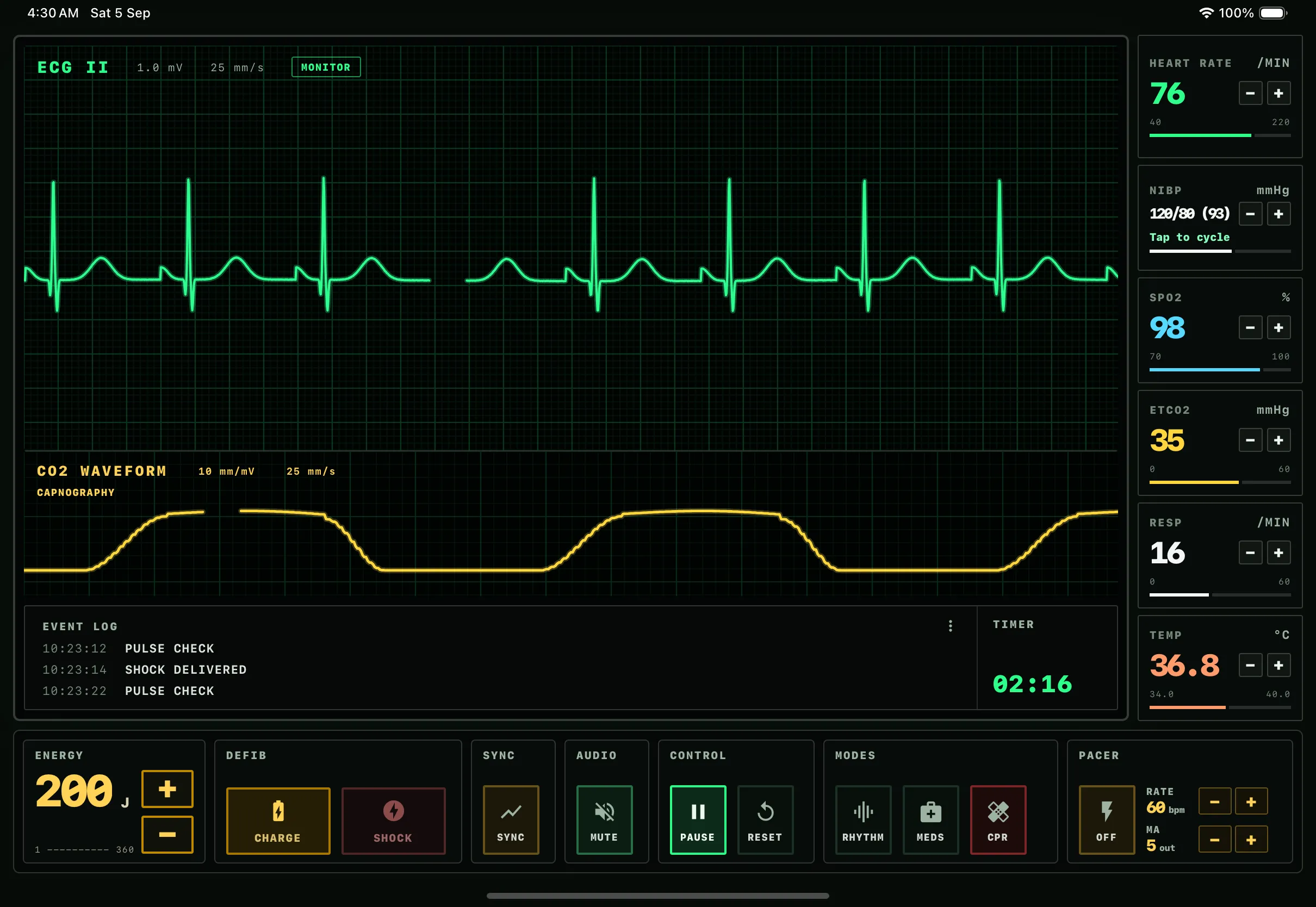
Rules and standards
What the software has to respect.
- MHRA software guidance
- Professional medical education alone is not a medical purpose in GB, but claims of diagnosis or monitoring change that, so wording matters.
- GMC and NMC standards
- Course leads map teaching to these standards; NMC allows up to 600 of 2,300 practice hours as simulated practice, which needs clear records.
- Public sector accessibility
- Public sector bodies, which include many universities and NHS organisations, must meet WCAG 2.2 AA and publish an accessibility statement.
- UK GDPR
- Assessment results, recordings and debrief notes are personal data about learners, with set retention, access rights and a lawful basis.
- UAE PDPL and Saudi PDPL
- Learner data in the Gulf needs a lawful basis, limits on transfers abroad and a way to handle correction or deletion requests.
We design software to support these obligations. Responsibility for meeting them stays with your organisation and its advisers.
What’s changing
Shifts to plan for.
October 2025
Resuscitation Guidelines 2025
Resuscitation Council UK published new guidelines, with updated courses from January 2026, so algorithms and scenarios need revisiting.
October 2024
WCAG 2.2 monitoring begins
The government began checking public sector websites and apps against WCAG 2.2 AA, which adds criteria on focus, dragging and target size.
September 2024
Saudi PDPL fully enforceable
The one-year grace period ended, so Saudi training providers handling learner data now face enforcement by SDAIA.
Relevant expertise
How we help.
- Product discovery Work out who the product is for, what they need first and which assumptions to test before you build.
- UX & UI design Interfaces designed around real tasks, with every state, error and edge case resolved before build.
- Prototyping & validation Test the key task with the people who do it, using a prototype, before committing engineering time.
- Web application development Browser-based tools for customers and staff, built for the data, roles and permissions behind them.
- Mobile app development iOS and Android apps that work offline, handle device permissions well and ship through the app stores.
Technologies we often use here


Common questions
Before you get in touch.
Is this clinical or diagnostic software?
No. We build training and teaching tools for practice and discussion, not for diagnosing or treating patients. The product itself makes that clear to the people using it.
How do you work with clinical educators?
They define what the tool must teach and review content such as rhythms, values and scenario steps. We prototype the session flow with them and refine it before building.
Can it connect to our learning platform?
That depends on what your platform supports. We review its integration options, sign-in and any learner data involved, then agree what should connect and what can stay separate.