Expertise / 02 of 04
Software engineering.
Build connected web and mobile products, with the APIs, data and permissions behind the screens.
Tell us what you’re building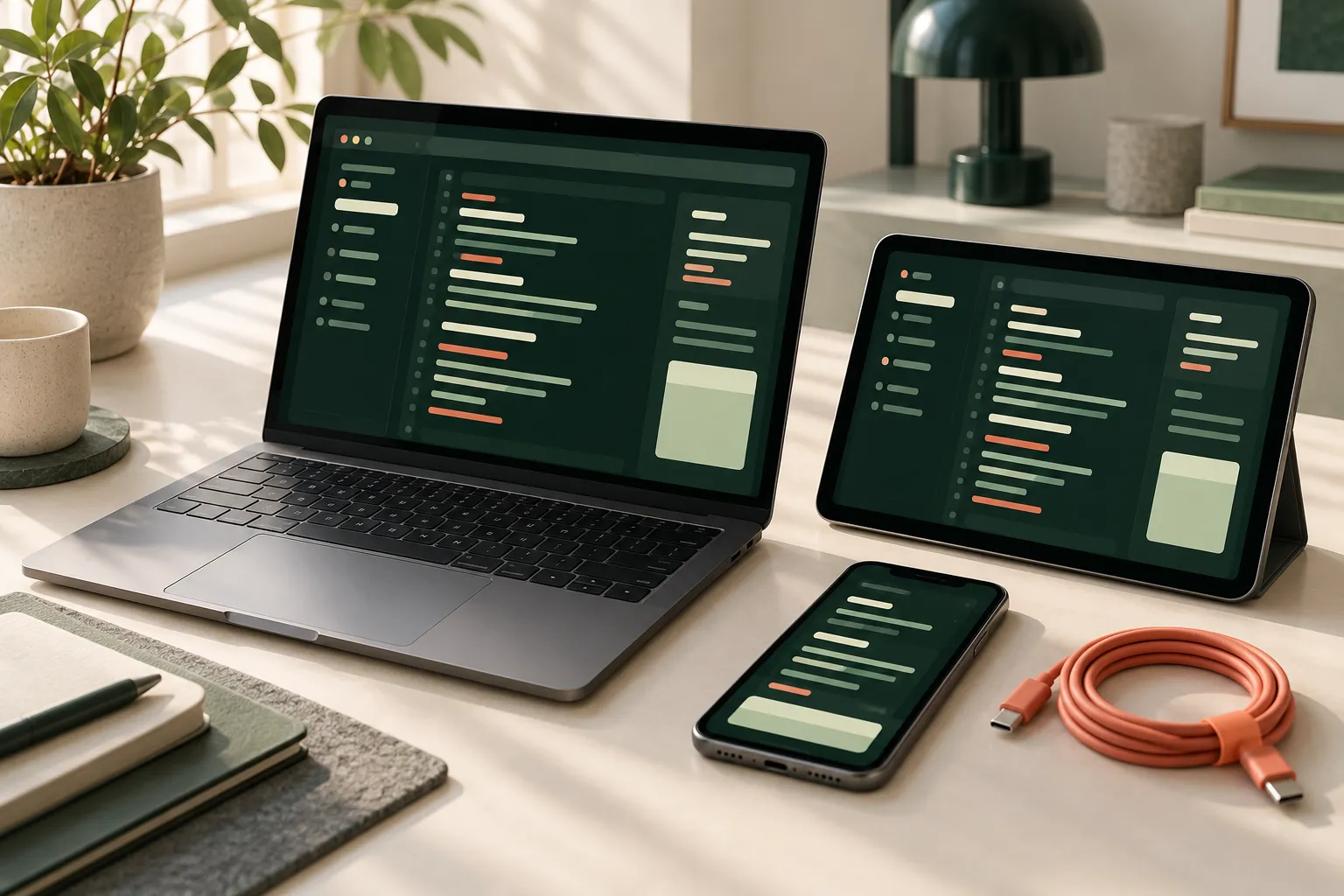
When to bring us in
Sound familiar?
- You are building a new platform, or one has outgrown its first version.
- Customers and staff need web and mobile apps that share the same data.
- Manual handoffs between tools are slowing everyday work.
Why us
What we bring to software engineering.
We run what we ship
We build and operate SoulCare and SimRhythm ourselves, so releases, support and upgrades after launch are familiar work.
One codebase where it fits
SimRhythm runs on iOS, Android and the web from a single Expo app, which keeps three platforms on one release.
Code and accounts in your name
Repositories, cloud accounts and databases belong to you, and handover includes deployment steps and operating notes.
Benefits
What changes for you.

One version of the record
Customers, staff and administrators work from the same data, so nobody re-keys a record from one system into another.
Changes you can ship
Tests on the paths that must not break let your team change the product without wondering what else moved.
Access that matches roles
Each person sees and does only what their role allows, which makes access reviews and audits simpler to answer.
Code your team can own
Readable structure and recorded decisions mean another developer can pick the work up without starting over.
Capabilities
Start with the part you need.
- 02.1Web application developmentBrowser-based tools for customers and staff, built for the data, roles and permissions behind them.Explore ↗
- 02.2Mobile app developmentiOS and Android apps that work offline, handle device permissions well and ship through the app stores.Explore ↗
- 02.3APIs & integrationsConnect your product to the systems your team relies on, with clear contracts and handled failures.Explore ↗
- 02.4Legacy modernisationReplace or rework an ageing system in stages, keeping the business running while it changes.Explore ↗
What the work includes
Build the whole journey, not just the visible screen.
Customer experiences, staff tools and administration often depend on the same underlying data. We design the boundaries between them, build the APIs and interfaces together, and check the critical paths as working software.
Web & mobile applications
Customer apps, staff tools and admin screens built as one product on shared data.
APIs & integrations
Connect the product to the systems your team already relies on, with clear contracts between them.
Architecture & quality
Data boundaries, permissions and tests for the paths that must not break.
Use cases
Projects we take on.
Field app and office dashboard
A mobile app for staff out on visits and a web dashboard for the office, both reading and writing the same records.
Replacing a spreadsheet process
Turning the shared spreadsheet that runs a core process into a web application with roles, validation and a change history.
Connecting an inherited system
Linking a newer customer app to an older back-office system through a documented API, without replacing either in one go.
Where AI helps
Useful, on a short leash.
Bounded jobs a model can take on inside software engineering work, with a person checking the result.
- Web application developmentKnowledge assistants ↗
Search across your records
Let staff ask questions in plain language over notes and documents, with answers limited to what their role can see.
- Mobile app developmentAI workflow automation ↗
Notes from voice
Turn a spoken note into a structured draft the person reviews before saving, useful when hands are busy.
- APIs & integrationsAI workflow automation ↗
Mapping messy inputs
Match free-text fields from another system, such as product names or categories, to your own codes, with uncertain matches queued for review.
- Legacy modernisationKnowledge assistants ↗
Explaining old code
Summarise what undocumented modules do, as a starting point for engineers who then confirm it against the running system.
Where it stops: permissions, releases and decisions that matter stay with ordinary tested code and a named person, not a model’s output.
A practical sequence
How the work runs.
Map the system
Identify roles, data, existing services, integration points and the smallest coherent release.
Build connected slices
Deliver reviewable end-to-end journeys rather than isolated screens or backend components.
Check real conditions
Test permissions, failures, edge states and deployment before preparing a handover.
Relevant product work
See it in practice.
Medical education / Our product
SimRhythm
SimRhythm keeps ECG and capnography on one monitor clock beside its simulator controls, in a single app for iOS, Android and the web.
Explore SimRhythm ↗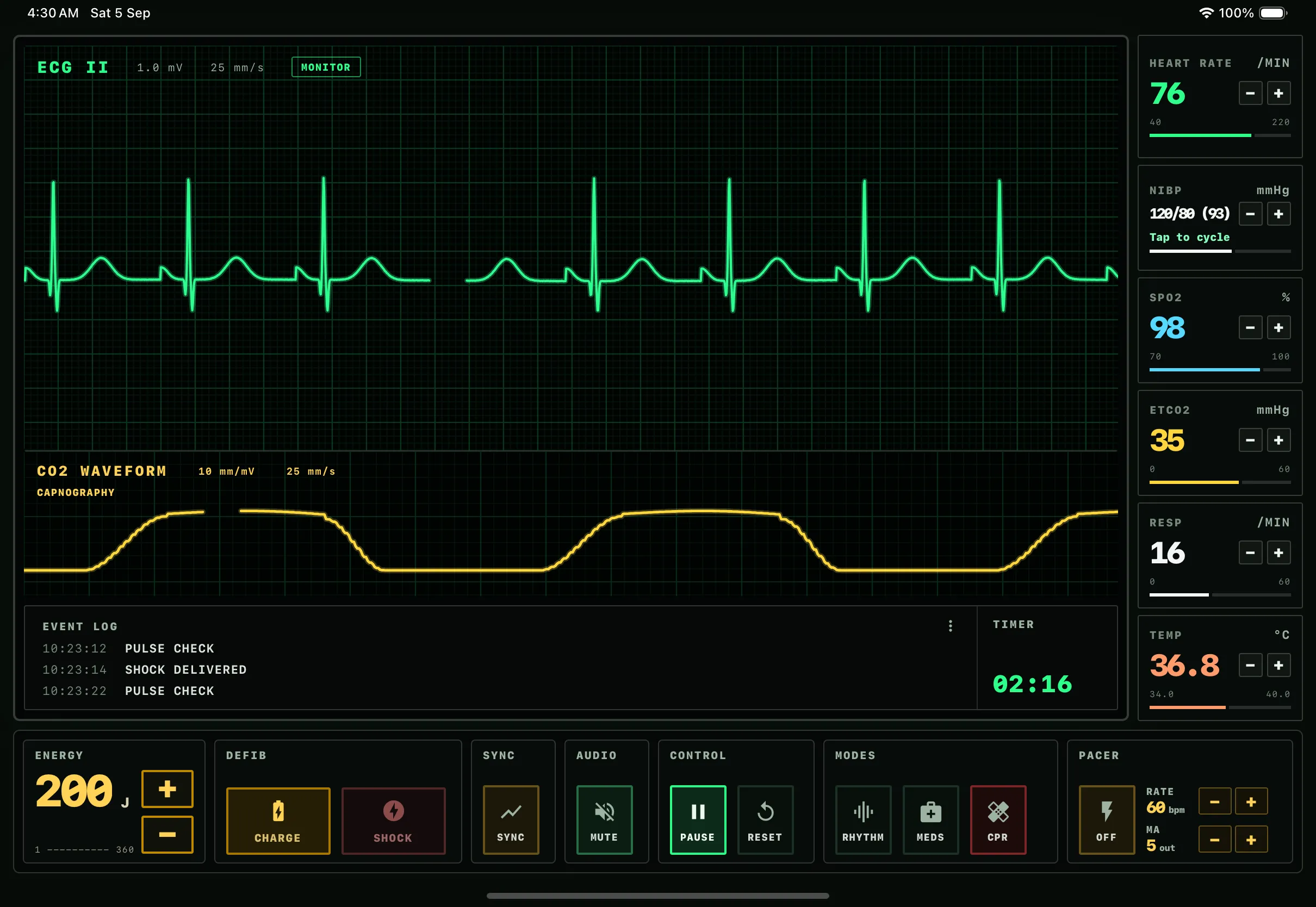
Industries
Software engineering by sector.
- Health & social care Carer apps have to record visits and medication on poor signal, then sync cleanly once the phone is back online.
- Medical education A simulator used in class has to behave the same on an iPad, an Android phone and a laptop browser, and that shapes the choice of codebase.
- Property & field services Workers capture photos and checklists on site, so uploads must survive a weak connection and still attach to the right job.
- Fintech & professional services Portals and internal tools need permissions down to the record, plus a log of who viewed, changed or approved each one.
What’s changing
Shifts to plan for.
Dates that affect software engineering work, checked against the official sources.
August 2026
Google Play targets Android 16
New apps and updates for phones and tablets must target API level 36. Extensions can be requested until 1 November 2026.
April 2026
Node.js 20 reaches end of life
The Node.js project stopped security fixes for version 20 on 30 April 2026, so services still on it need a move to 22 or 24.
April 2026
App Store requires the iOS 26 SDK
Since 28 April 2026, uploads must be built with Xcode 26. Apps can still support older iOS versions; only the build tools changed.



















Cost
What shapes the estimate.
Platforms in scope
A web app alone is smaller than web plus iOS and Android, even when one shared codebase covers more than one platform.
Systems to connect
Every external system adds work. One with thin documentation or no API at all adds considerably more.
Data migration
Moving records from an old system means cleaning, mapping and checking them, and older data is rarely as tidy as expected.
Decisions still open
Unsettled questions about roles, rules or workflows resurface during the build, where they are slower and dearer to resolve.
Engagement
Ways to work together.
A first, fixed stage
Discovery, a prototype or a technical review with agreed outputs, so the next decision is made with something concrete in hand.
Delivery in phases
The build split into releases, each with a scope you review and approve before it starts.
Ongoing engineering
An agreed scope for support and improvements after launch, with response expectations written down.
Choosing a partner
Questions to ask any provider.
Including us. The answers tell you more than a portfolio does.
Who owns the code and the accounts?
You should hold the repositories, cloud accounts and app store listings, so changing provider never means losing access.
How do you test the parts that matter most?
A general promise of good testing tells you little. Ask which paths are covered and how failures are caught before release.
How will we see progress?
Working software you can try at regular points shows real progress. Status reports on their own can hide a problem for weeks.
What happens if another team takes over?
Documentation, readable code and a defined handover decide whether a new team can continue the work or has to start again.
Common questions
Before you get in touch.
Can you work on an existing codebase?
Yes. We start by reviewing the architecture, dependencies, deployment and the area you want to change. That review helps us scope work around the system you already have.
Can you collaborate with our internal developers?
Yes. We can agree a defined part of the product, shared interfaces and a review process with your team. Responsibilities and handover expectations are part of the scope.
Which technologies do you use?
Our work includes React, Astro, React Native with Expo, Go, Node.js, PostgreSQL, AWS and Terraform. We choose around the product, existing systems and the team that will maintain it.
How long will a build take?
That depends on scope, integrations, data migration and the decisions still to be made. We estimate after understanding those dependencies and can separate the work into releases.