One visit, many views
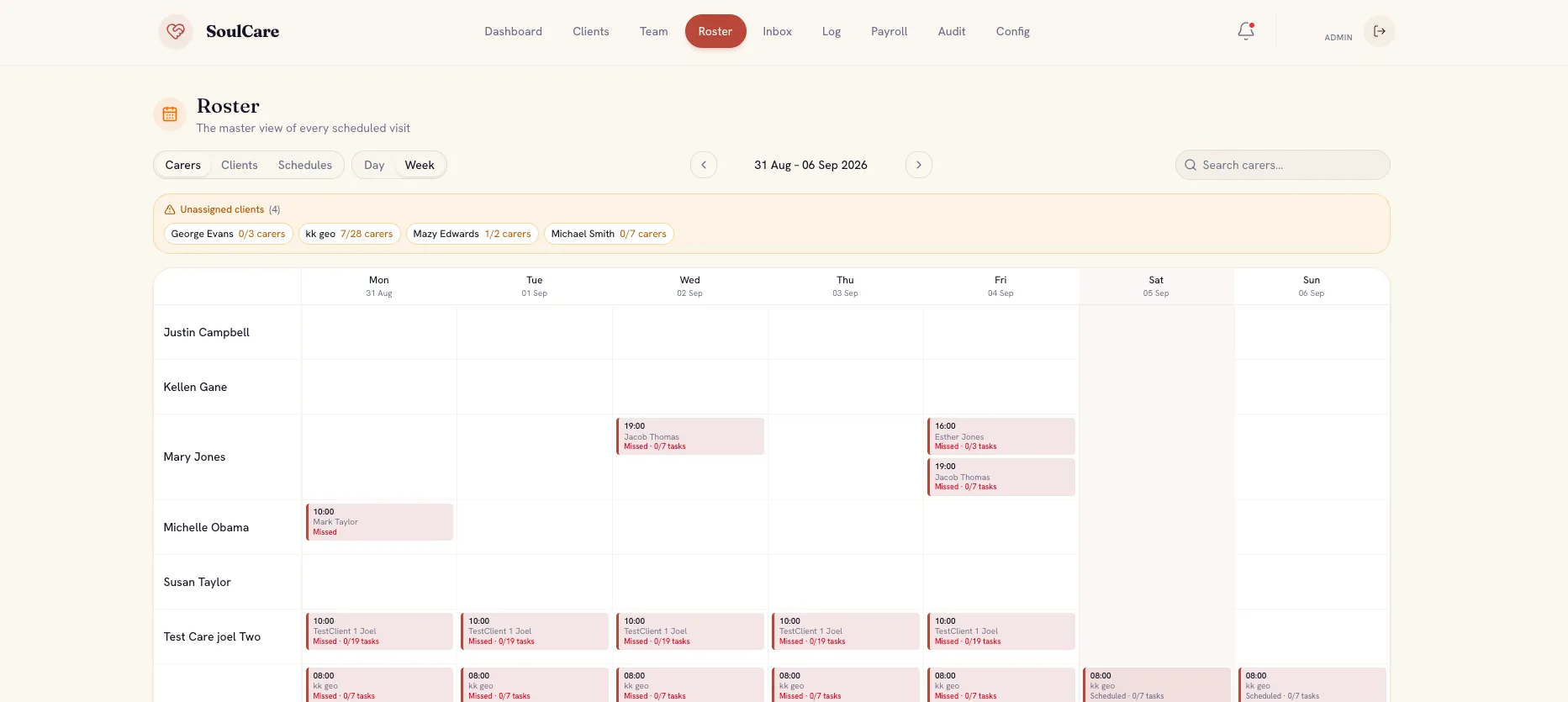
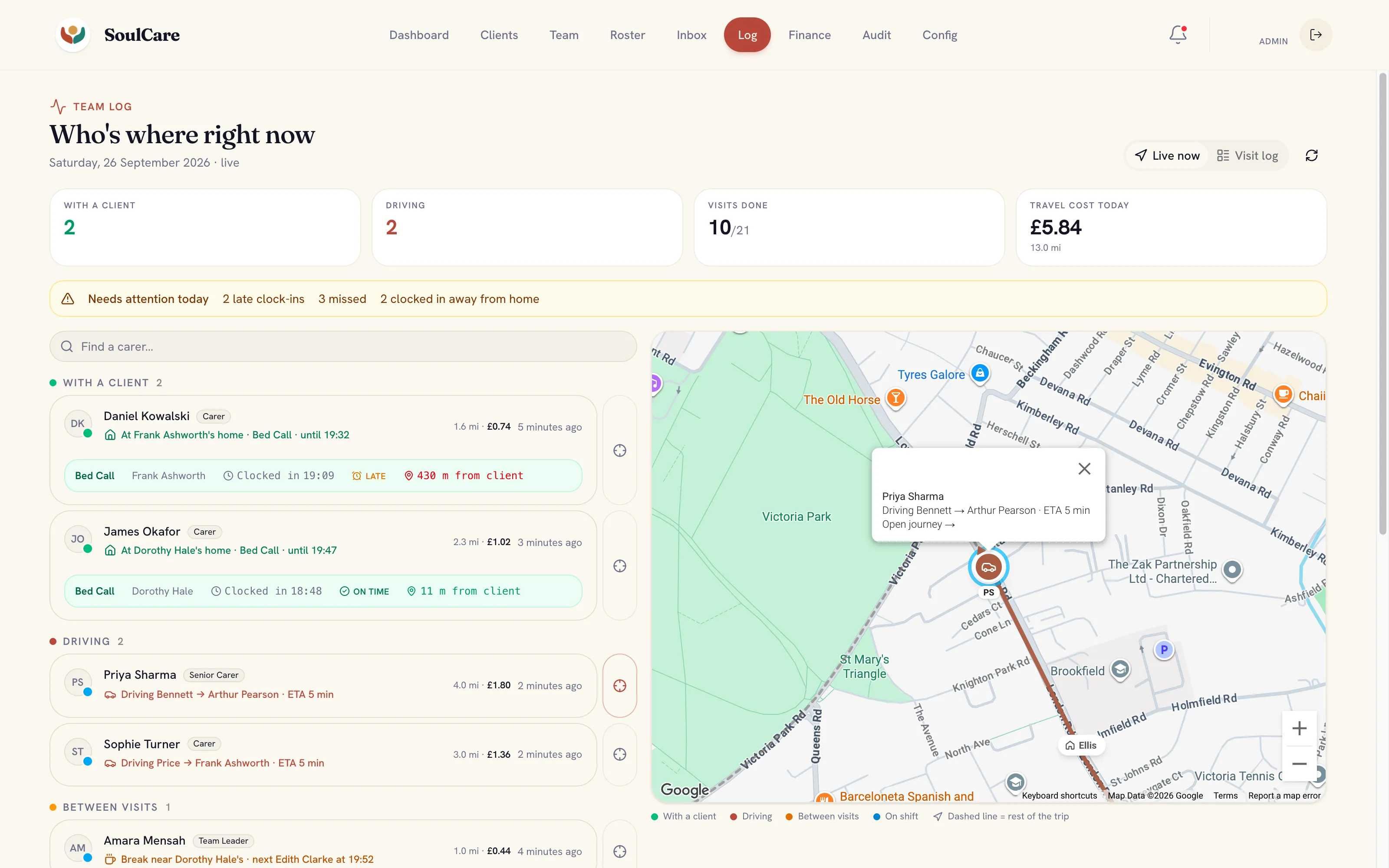
The master roster, a carer’s schedule, a client’s timeline and the family app are different views of the same visit. Change it once and every view follows.
Our product / Home care operations
Making care coordination visible to everyone involved.
 React
 Go
 React Native & Expo
 PostgreSQL
 AWS
 Terraform
The challenge
In home care, one visit involves several people who rarely share a screen. A coordinator plans it, a carer travels to it, a client receives it and a family wants to know it happened. When a visit moves, is missed or needs a second carer, that change has to reach all of them. Medication, pay and invoicing all depend on what actually happened.
The system
We built SoulCare around a single record of each visit. A recurring schedule template generates dated visits; the roster, the carer’s phone, the client’s record, the medication chart and the finance screens all read those same visits rather than keeping copies. Each care provider’s data lives in its own isolated database.
Real product interface · Demonstration data
Silent product tour · Real product interface · Demonstration data
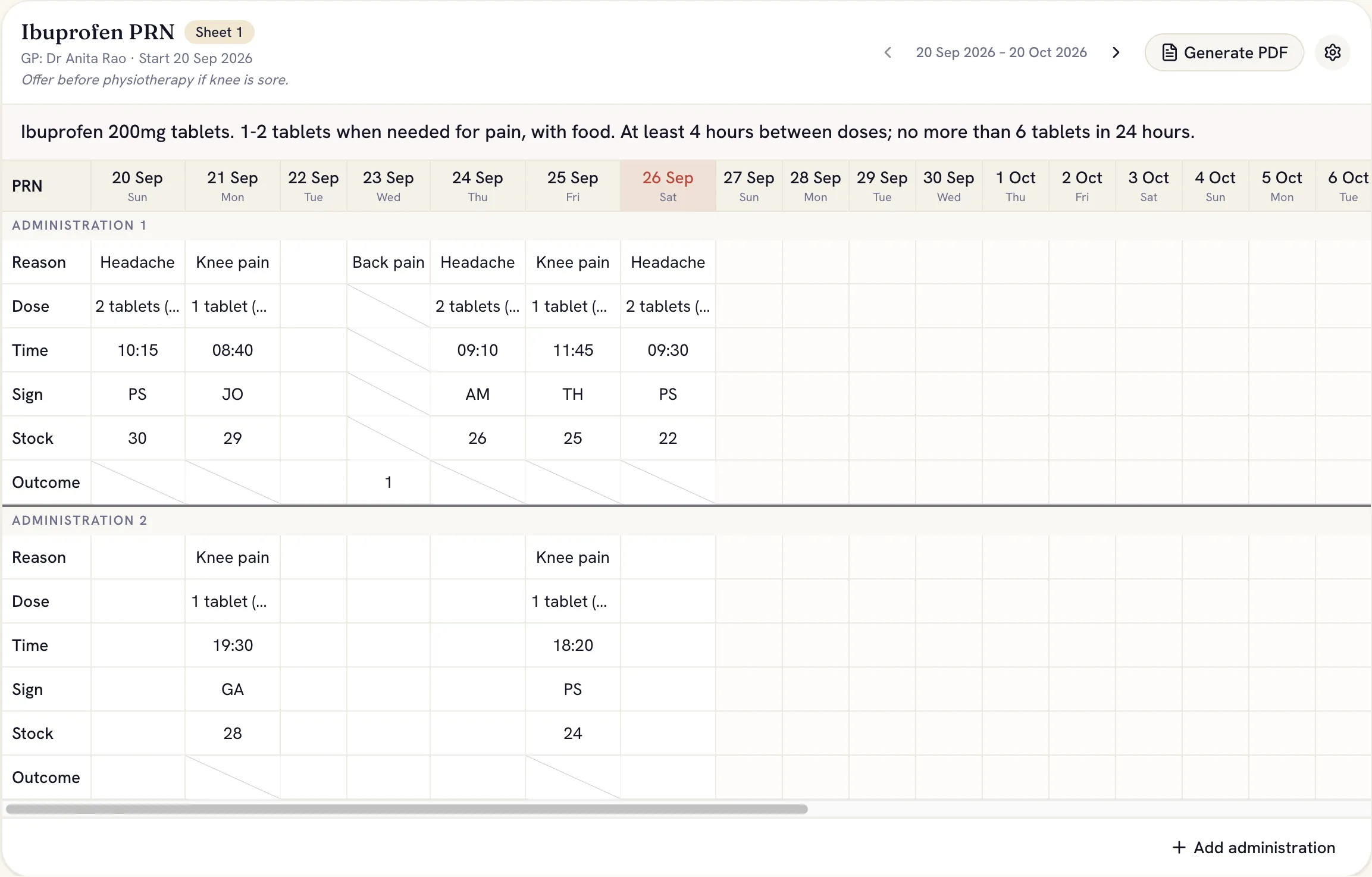
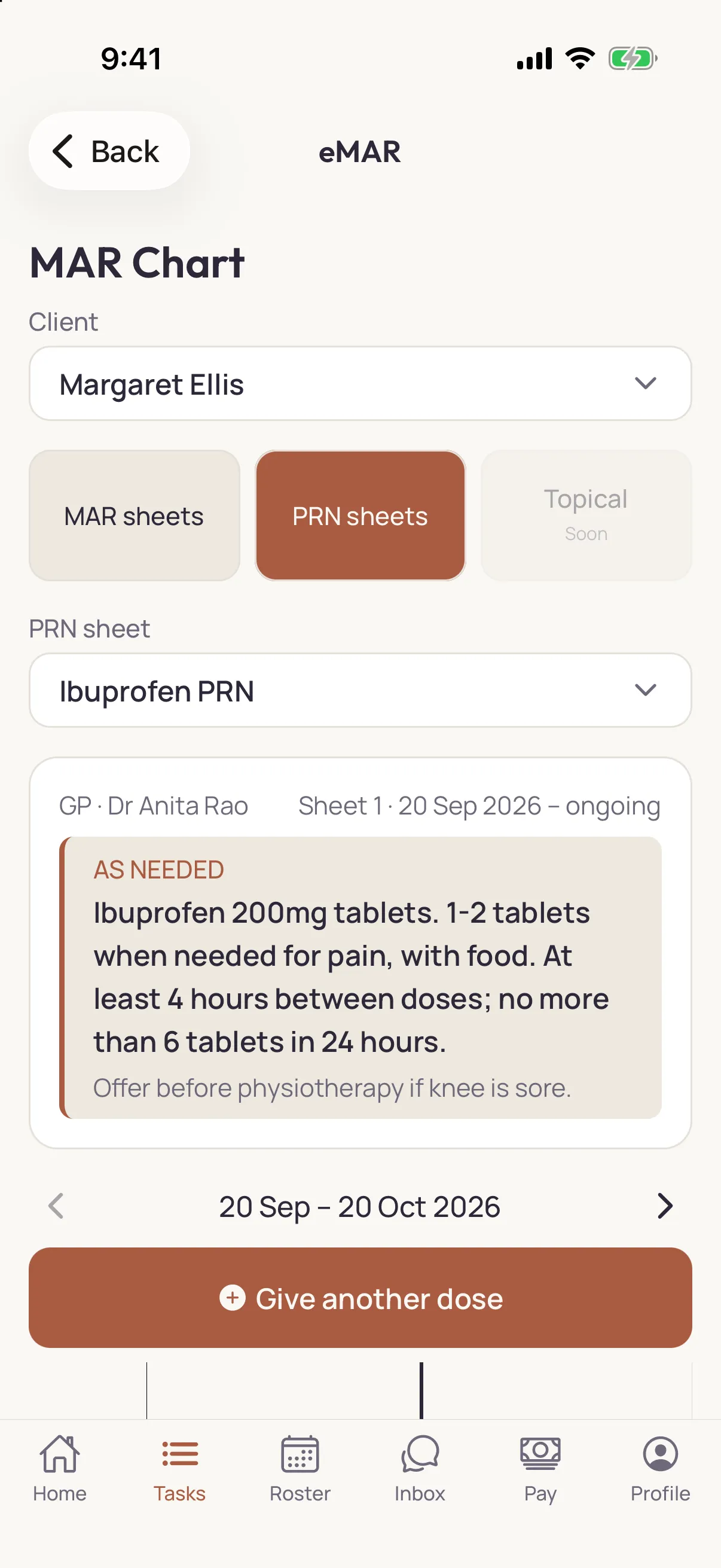
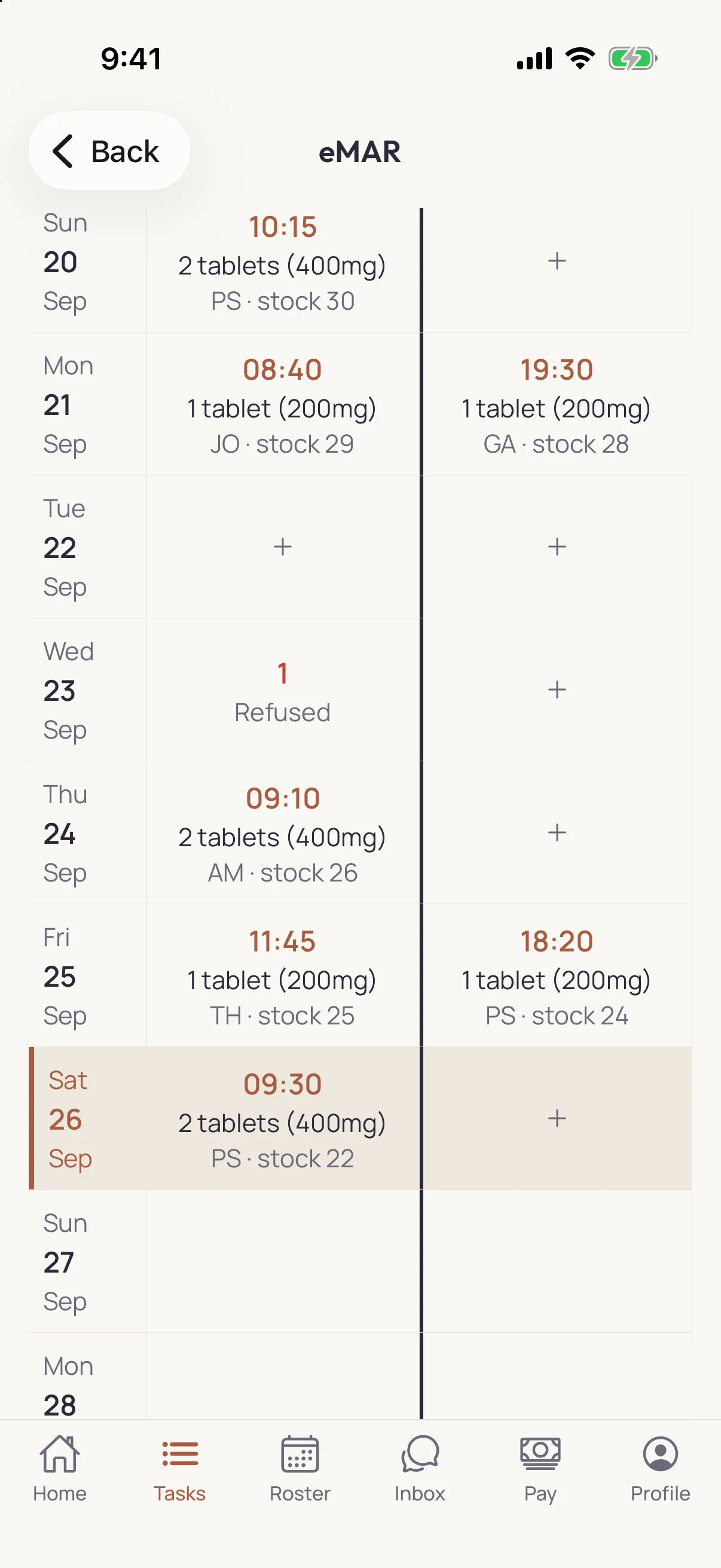
Product capability
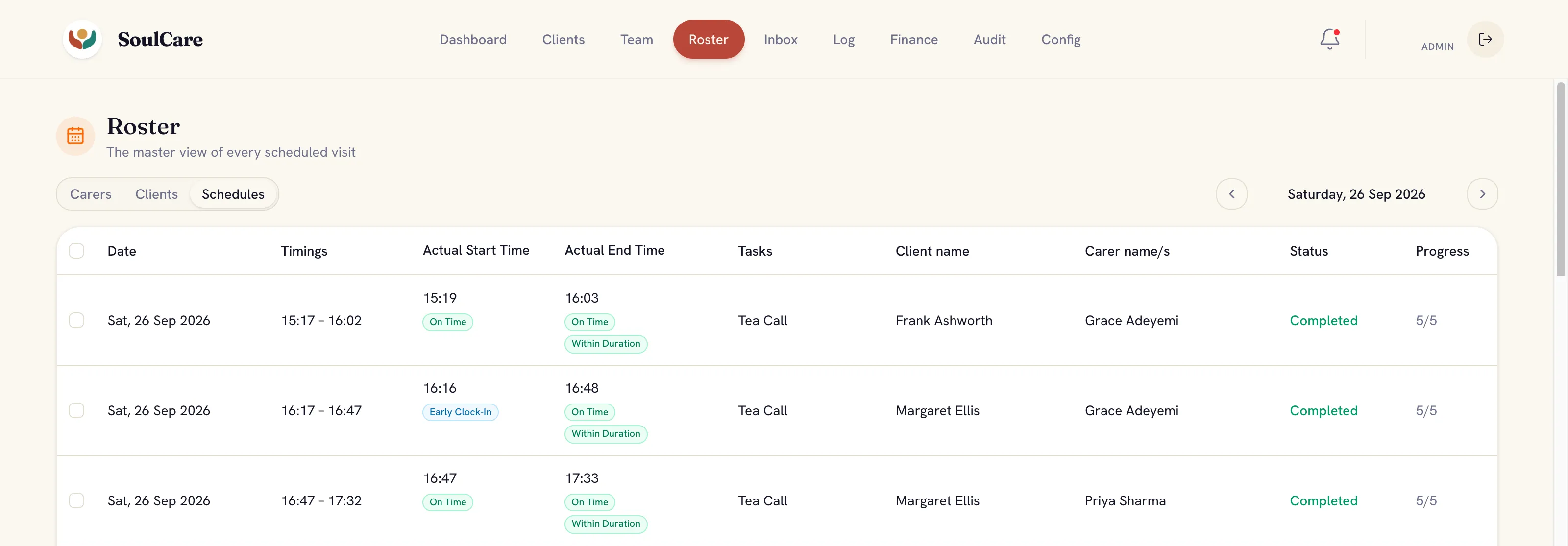
A coordinator can reassign or move a visit and check it for clashes and drive time before saving. The carer sees the change on their phone, clocks in on arrival and records medication against the chart. The team can follow carers’ live journeys, compare planned and actual times, and confirm visits before they are priced for pay and invoices.
Connected applications
| App | Who uses it | What they do there |
|---|---|---|
| Care dashboardWeb | Coordinators & managers | Clients, care plans, schedule templates, master roster, eMAR, team log, pay and invoicing |
| Carer appiOS & Android | Carers | Daily rota, visit details, clock in/out, task checklists, medication charts, messages, pay |
| Family appiOS & Android | Family members | Visit status, requests to the care team, reporting concerns |
| Admin consoleWeb | The SoulCare team | Setting up providers, each with its own database |
Capabilities
The web apps are React single-page apps; the carer and family apps are React Native (Expo) with over-the-air updates. The backend is a set of small Go services on AWS Lambda behind API Gateway, with Cognito for sign-in and infrastructure defined in Terraform. Each provider has its own Postgres database. Road routes and drive times come from Google’s routing service, and live updates use AWS AppSync.
ReactReact Native / ExpoGo AWS LambdaTerraformPostgreSQL
 Cognito
The master roster, a carer’s schedule, a client’s timeline and the family app are different views of the same visit. Change it once and every view follows.
Clock-in and clock-out, lateness thresholds, GPS journeys and road-based drive times turn a planned rota into a record of what actually happened.
Digital medication charts, carer pay and funder invoices are built from confirmed visits, so the numbers trace back to the care that was delivered.
The sector around it
Our line on AI here: AI should not decide on medication, change a care plan or judge whether someone is safe. Anything it drafts about a person’s care is checked and signed off by a named member of staff.
Rules and standards in this sector ↗December 2025
The government reported that four in five adult social care providers in England now use a digital social care record.
June 2025
The Data (Use and Access) Act 2025 lets government set information standards that IT suppliers in health and adult social care in England must meet.
September 2024
The one-year grace period under Saudi Arabia’s Personal Data Protection Law ended on 14 September 2024, and penalties can now apply.